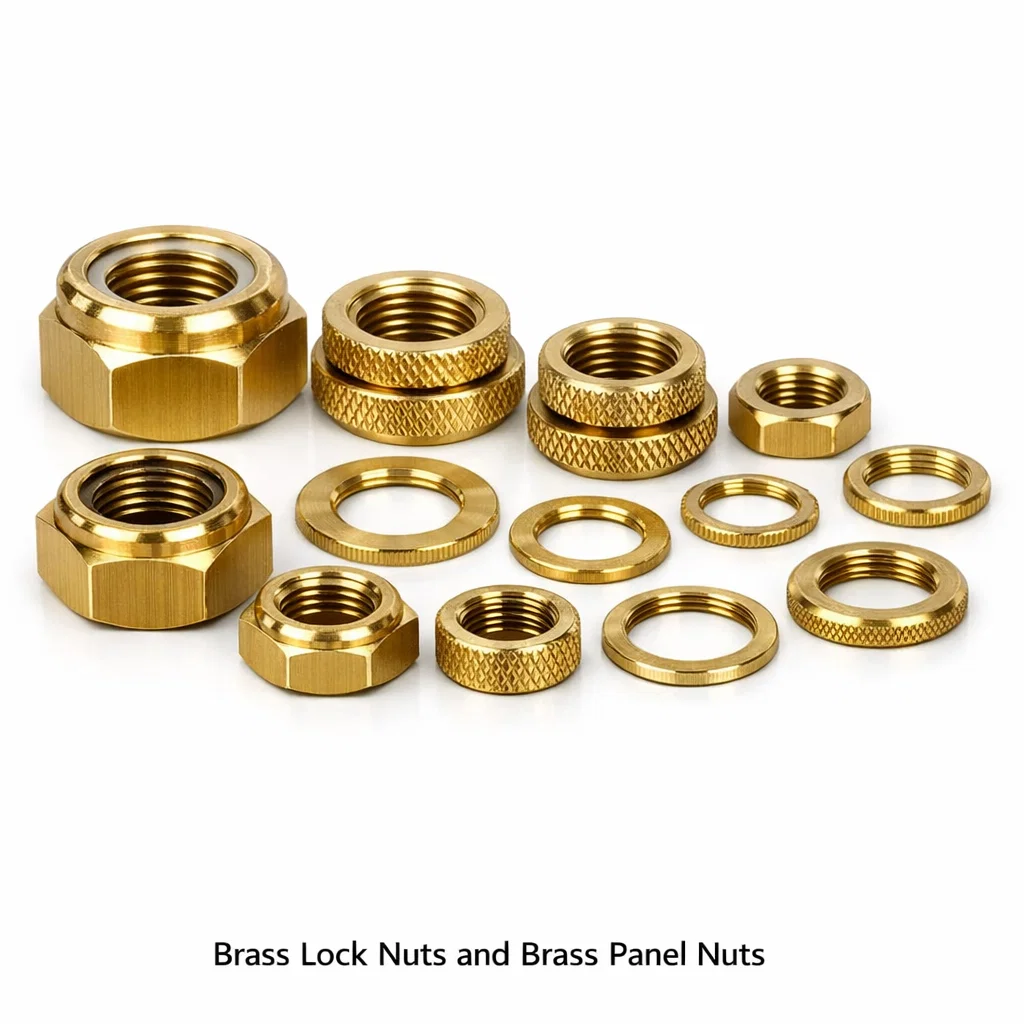
Square tape clamps—sometimes called flat tape clamps, strap clamps, or band clamps—are purpose-engineered hardware used to connect flat copper tape earthing conductors to ground rods, structural steelwork, equipment frames, and other grounding points in electrical installations. When manufactured in brass or bronze, these clamps deliver the corrosion resistance, electrical conductivity, and mechanical holding force demanded by utility substations, industrial plants, and large commercial facilities across the United States.
Understanding Flat Copper Tape Earthing Systems
Copper tape (also called copper strap or flat copper conductor) is widely used as a horizontal grounding conductor in substations, telecommunications buildings, data centers, and industrial facilities. Its flat profile allows installation in shallow trenches or direct attachment to structural surfaces, minimizing installation costs versus round conductors. Tape widths of 25 mm × 3 mm, 25 mm × 6 mm, 32 mm × 6 mm, 50 mm × 6 mm, and 50 mm × 10 mm are the most common sizes encountered in US and international installations. Square tape clamps are the hardware that connects these tape conductors to the rest of the earthing system.
Brass vs. Bronze Square Tape Clamps: Key Differences
Both brass and bronze clamps offer excellent corrosion resistance compared to ferrous alternatives, but they have distinct characteristics that make each better suited to certain applications. Brass (primarily a copper-zinc alloy) clamps are somewhat easier to machine and are cost-effective for indoor or semi-exposed applications where soil contact is limited. Bronze clamps, with their higher tin or aluminum content, outperform brass in direct burial, coastal, and chemically aggressive environments. For permanent buried earthing applications in the continental USA, bronze square tape clamps are the preferred specification.
Types of Square Tape Clamps for Earthing
Single Run Tape Clamps
Single run clamps accept one flat tape conductor and are used for straight-through connections or tape terminations at a grounding point (equipment frame, building steel, or ground rod). They are the most common clamp type in industrial and commercial earthing ring installations.
Double Run (Cross) Tape Clamps
Double run clamps accommodate two tape conductors crossing at right angles or in parallel, making them ideal for mesh earthing grids in substations and large industrial facilities. A single hardware piece replaces what would otherwise require two separate clamps and a bonding link, reducing installation time and the number of potential failure points.
Tape-to-Round Conductor Clamps
These clamps provide the transition between flat tape and round copper conductors (such as bare copper wire or cables), which is commonly required at connection points between tape ring mains and equipment grounding conductors. They are also used where tape connects to bare copper rope or stranded conductors at panel boards and switchgear.
Tape-to-Ground Rod Clamps
Specialized clamps designed to clamp flat tape directly to a ⅝-inch or ¾-inch diameter ground rod. These replace the conventional round-wire ground rod clamp in tape-based earthing systems, providing a secure mechanical and electrical connection between the tape ring and the driven ground electrode.
Related Products for Tape Earthing Systems
- Bronze Ground Rod Couplers – For extending ground rod depth to meet NEC burial requirements
- Bronze Ground Rod Clamps – For conductor-to-rod connections in mixed tape/round wire systems
- Copper Compression Lugs – For terminating tape or stranded conductors at equipment terminals
- Bare Soft-Drawn Copper Tape – 99.9% purity annealed copper in standard sizes per ASTM B187
- Exothermic Weld Powder and Molds – For permanent molecular-bond connections in substations where clamps are prohibited by project specification
- Stainless Steel Tape Clamps – For high-temperature or extreme chemical environments where copper alloys may not be suitable
Material Grades and International Equivalents
| Property | CW617N Brass (Free-Cutting) | CDA 360 Brass | CDA 836 Bronze (LG2) | CDA 932 Bronze |
|---|---|---|---|---|
| Copper % | 57–59 | 61–63 | 83–86 | 81–85 |
| Zinc % | 37–42 | 34–38 | 4–6 | 2–4 |
| Lead % | 1.6–2.5 | 2.5–3.7 | 4–6 | 6–8 |
| Tin % | — | — | 4–6 | 6–8 |
| US Standard | ASTM B16 | ASTM B16 | ASTM B584 | ASTM B505 |
| BS Equivalent | BS 2874 CZ122 | BS 2874 CZ124 | BS 1400 LG2 | BS 1400 LG2 |
| ISO Equivalent | ISO 426/1 CuZn39Pb2 | ISO 426/1 CuZn36Pb3 | ISO 1338 CuSn5Pb5Zn5 | ISO 1338 CuSn7Pb7Zn3 |
| DIN Equivalent | DIN 17660 CuZn39Pb2 | DIN 17660 CuZn36Pb3 | DIN 1705 G-CuSn5ZnPb | DIN 1705 G-CuSn7ZnPb |
| Tensile Strength | 380 MPa | 370 MPa | 280 MPa | 310 MPa |
| Corrosion Resistance | Good (indoor/semi-exposed) | Good | Excellent (buried) | Excellent (buried) |
| Best Application | Indoor, panel rooms | Light commercial | Direct burial, substations | Heavy industrial, utilities |
Standards and Specifications
Brass and bronze square tape clamps for earthing systems in the USA must comply with or reference several key standards. UL 467 covers grounding and bonding equipment including tape clamps and their current-carrying capacity ratings. IEEE Std 80 provides engineering guidance on substation earthing design, including conductor sizing and clamp selection criteria. ANSI/NFPA 780 covers clamp requirements in lightning protection systems. NFPA 70 (NEC) Article 250 governs the overall grounding and bonding requirements, including conductor sizing, material selection, and connection methods.
Sizing Tape Clamps Correctly
Selecting the right tape clamp requires matching three parameters: tape width (typically 25 mm, 32 mm, or 50 mm), tape thickness (typically 3 mm or 6 mm), and the attachment surface (round rod diameter, flat plate, or structural angle). Always specify the full tape cross-section when ordering—for example “25 mm × 6 mm single run tape clamp” or “50 mm × 10 mm cross clamp.” Undersized clamps that grip only a portion of the tape width create localized heating and can work-harden the tape, leading to cracking at the clamped zone.
Why Choose Us for Brass and Bronze Tape Clamps
We manufacture a comprehensive range of brass and bronze square tape clamps for earthing applications, covering all standard tape sizes from 20 mm × 3 mm through 75 mm × 10 mm. Our clamps are precision-machined from certified-grade brass and bronze bar stock, with full traceability to ASTM, BS, and ISO standards. We supply single run, double run (cross), tape-to-rod, and tape-to-round conductor configurations, with custom designs available for non-standard tape dimensions or connection geometries. Our production facility in Jamnagar, India—the global hub for brass and bronze precision manufacturing—allows us to offer competitive pricing with ISO 9001-certified quality systems and full material certification documentation. We export directly to US, Canadian, UK, and Australian customers with standard lead times of 3–4 weeks on catalog items and 5–7 weeks on customs.
Frequently Asked Questions
Q1: What is the most common tape size for substation earthing in the USA?
The most commonly specified flat copper tape sizes in North American substation earthing designs are 25 mm × 6 mm for secondary grounding conductors and 50 mm × 6 mm or 50 mm × 10 mm for main grounding ring conductors. These sizes provide adequate current carrying capacity for most fault-current dissipation requirements and are compatible with a wide range of commercially available tape clamps.
Q2: Are brass tape clamps suitable for direct burial?
Standard free-cutting brass clamps (CW617N/CDA360) can be used in buried applications in neutral pH soils, but they are susceptible to dezincification in acidic or high-chloride soils, which can cause them to become brittle and fail. For direct burial applications, especially in the coastal Southeast, Pacific Northwest, or any location with aggressive soil chemistry, bronze clamps (LG2/CDA 836 or CDA 932) are strongly recommended.
Q3: What bolt grade should be used with bronze tape clamps?
Stainless steel (316 SS) or silicon bronze fasteners are recommended for buried or exposed installations to prevent galvanic corrosion and ensure the fastener does not corrode away independently of the clamp body. Galvanized or zinc-plated steel bolts should be avoided in direct burial or high-moisture applications where they may corrode significantly faster than the bronze clamp body.
Q4: What is the difference between a tape clamp and an exothermic weld for tape connections?
Tape clamps are mechanical connections—they rely on clamping force to maintain electrical continuity. Exothermic welds (cadweld-type) create a permanent molecular bond with very low resistance and no mechanical parts to loosen. Clamps are preferred where future maintenance access is needed; exothermic welds are preferred for permanent, maintenance-free substation grids where IEEE Std 80 or project specifications mandate welded connections.
Q5: Can brass tape clamps be used with stainless steel tape?
Yes, but the galvanic potential between brass/bronze (noble) and stainless steel (also relatively noble but different composition) should be reviewed for the specific soil chemistry of the installation. In most applications, the combination is acceptable. If in doubt, use stainless steel clamps with stainless tape to eliminate galvanic concerns entirely.
Q6: How many tape clamps are needed per meter of copper tape in a substation grid?
Tape clamps are only needed at connection points—tape-to-rod junctions, tape crossing points (in mesh grids), and tape terminations at equipment or structure connections. The tape itself does not require intermediate support clamps unless the installation specification requires physical restraint of the tape along its run (for example, tape on a cable tray or conduit rack). Crossing point clamps in mesh grids are spaced per the grid design, typically 3–10 meters depending on substation size and fault current levels.
Q7: Do tape clamps affect the current-carrying capacity of the tape conductor?
A properly sized and tightened tape clamp should not reduce the conductor’s current-carrying capacity. The concern is with undersized clamps that contact only part of the tape cross-section—these create a localized constriction that increases resistance and heating under fault current. Always specify clamps that fully enclose the tape dimensions and apply the manufacturer’s recommended bolt torque to ensure full contact area engagement.
Q8: What surface preparation is required before installing tape clamps?
Both the copper tape and the mating surface should be free of oxides, coatings, and contaminants before installation. Lightly buff the tape surface with an abrasive pad, then apply a thin layer of electrically conductive joint compound (such as NoAlOx) to the contact interface. This ensures maximum contact area and prevents future oxide buildup that could increase joint resistance over time. This step is particularly important in high-humidity coastal and tropical US installations.
Q9: Are there labeled tape clamps that identify conductor size?
Some manufacturers offer clamps with embossed or engraved tape size markings on the body for easy identification during installation and inspection. This is particularly helpful on large substation projects where multiple tape sizes are in use simultaneously. We can incorporate custom markings or customer part numbers into our castings or machined clamps upon request for orders above minimum quantities.
Q10: What is the temperature range for brass and bronze tape clamps?
Bronze and brass tape clamps retain their mechanical and electrical properties across the full range of ambient temperatures encountered in US electrical installations, from −40°F (−40°C) in northern Minnesota and Alaska to 140°F (60°C) in direct-sunlight desert applications in Arizona and Nevada. At elevated fault current temperatures (up to 250°C for short-duration events), both materials maintain adequate tensile strength to remain clamped.
Q11: Can I get tape clamps in non-standard tape sizes?
Yes. Custom tape clamp dimensions are a routine part of our manufacturing service. We regularly produce clamps for tape sizes specified in legacy installation drawings, project-specific conductor sizes, and international standards-based sizes not available from commodity distributors. Provide your tape width, thickness, and connection type and we will supply a sample or dimensional drawing for approval within one week.
Q12: What documentation can you provide with a shipment of tape clamps?
We provide mill test reports (MTRs) for the bar stock used in production, chemical and mechanical property certifications to ASTM or customer-specified standards, dimensional inspection reports, country-of-origin documentation, and RoHS compliance declarations. For utility or government projects, PPAP documentation and first article inspection reports are available upon request with adequate lead time.